Advanced Hip Preservation Surgery for Active Patients
Hip pain and joint damage can significantly affect mobility, sports participation, and quality of life, particularly in younger and active patients. Hip preservation surgery focuses on treating the underlying condition while maintaining as much of the natural hip joint as possible. Depending on the diagnosis, treatment may help relieve pain, improve hip function, and delay or prevent the need for hip replacement.
Dr. Richard Judd Robins, a dual board-certified orthopaedic surgeon with subspecialty certification in Orthopaedic Sports Medicine, provides advanced hip preservation surgery for patients throughout Salt Lake City, Park City, Farmington, South Jordan, and surrounding Utah communities. Dr. Robins develops individualized treatment plans based on each patient's hip condition, activity level, anatomy, and long-term goals.
- Salt Lake City
- Farmington
- Salt Lake City
- Book An Appointment
What is Hip Preservation Surgery?
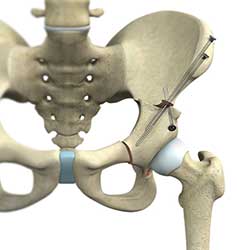
The hip is a ball and socket joint comprising of the femur (thigh bone) and the pelvic bone. The head of the femur (ball) articulates with a cavity (socket) called the acetabulum in the pelvic bone. To facilitate the smooth and frictionless movement of the hip joint, the articulating surfaces of the femur head and acetabulum are covered by spongy articular cartilage. Injury, wear-and-tear and certain diseases can result in the wearing away of the cartilage tissue, causing painful rubbing of bones. Hip replacement surgeries have long been the choice of treatment, where the damaged parts of the joint are removed and replaced with a prosthesis. However, in young active patients, the prostheses are highly prone to wear-and-tear, and the need for repeat surgery. Hip preservation is a surgery that overcomes the limitations of joint replacement.
What are the Indications for Hip Preservation Surgery?
Some of the conditions indicated for hip preservation surgery include:
- Femoroacetabular impingement (FAI): friction in the hip joint from abnormal bony irregularities
- Hip dislocation: head of the femur moves out of the socket
- Hip dysplasia: A congenital hip condition characterized by a shallow acetabulum
- Labral tear: tear or separation of the labrum, a cartilaginous ring that surrounds the socket and seals the hip joint
- Avascular necrosis: disrupted blood flow to the hip joint, causing the death of bone tissue
What is the Procedure for Hip Preservation Surgery?
Hip preservation surgery includes various techniques:
Periacetabular Osteotomy
Periacetabular osteotomy is a surgical procedure to treat hip dysplasia. This involves cutting the acetabulum from the pelvic bone and repositioning it with screws to allow for a better fit of the femoral head. The procedure reduces pain, restores function and prevents further deterioration of the hip joint, thereby increasing the life of the hip joint and postponing total hip replacement.
Surgical Hip Dislocation
Surgical hip dislocation is a surgical technique that involves the dislocation of the hip joint during surgery to facilitate easy access to the inside tissues of the hip joint. It helps your surgeon to clearly view and treat abnormalities present deep into the hip joint.
Femoral Osteotomy
An osteotomy is a surgical procedure that involves cutting and reshaping of a bone. The femur is cut at the end close to the hip joint and realigned so that it forms a normal angle. This improves the distribution of force placed on the joint and prevents wear-and-tear of the cartilage.
Hip Arthroscopy
Arthroscopy, also referred to as keyhole or minimally invasive surgery, is a procedure in which an arthroscope is inserted into a joint to check for any damage and repair it simultaneously. Hip arthroscopy is a surgical procedure performed through very small incisions to diagnose and treat various hip conditions.
The various hip preservation surgeries for severe hip pain and dysfunction in young and active patients have been found to be beneficial, and also avoid or delay the need for hip replacement surgery.

Richard Judd Robins
MD, FAAOS, FAANA Dual Board Certified in Orthopaedic Surgery and Sports Medicine
Dr. Robins brings more than 26 years of experience in military service, orthopaedic surgery, sports medicine, clinical care, and academic leadership. Throughout his distinguished career, he has dedicated himself to caring for active-duty military personnel, athletes, and patients with complex orthopaedic injuries while advancing education, research, and mentorship in orthopaedic sports medicine.
Why Choose Dr. Richard Judd Robins for Hip Preservation Surgery?
Hip preservation procedures can involve complex conditions affecting the bones, cartilage, labrum, and overall structure of the hip. Choosing an experienced orthopaedic sports medicine surgeon is important for determining whether joint-preserving treatment is appropriate.
Dr. Robins offers:
- Dual board certification in Orthopaedic Surgery and Orthopaedic Sports Medicine
- Fellowship training in Orthopaedic Sports Medicine
- Advanced expertise in hip preservation and minimally invasive hip procedures
- Experience treating active patients and sports-related hip conditions
- Individualized treatment plans based on hip anatomy, symptoms, and activity goals
- Comprehensive evaluation and treatment for conditions such as hip dysplasia, FAI, and labral tears
- Comprehensive care from diagnosis through rehabilitation and recovery
- A focus on preserving natural hip function and helping patients remain active
Whether you are experiencing hip pain from a structural abnormality, sports injury, or progressive joint damage, Dr. Robins works to identify the underlying problem and determine an appropriate joint-preserving treatment strategy.
Hip Preservation Surgery FAQs
What is hip preservation surgery?
Hip preservation surgery refers to procedures designed to treat hip conditions while preserving the patient's natural hip joint. Depending on the condition, treatment may involve arthroscopy, osteotomy, labral repair, or other corrective procedures.
Who may benefit from hip preservation surgery?
Hip preservation may be appropriate for younger or active patients with conditions such as femoroacetabular impingement, hip dysplasia, labral tears, or certain structural abnormalities. A comprehensive evaluation is necessary to determine whether preservation surgery is appropriate.
What conditions can hip preservation surgery treat?
Hip preservation procedures may be used to address femoroacetabular impingement (FAI), hip dysplasia, labral tears, hip instability, certain alignment problems, and other conditions affecting the structure and function of the hip.
Can hip preservation surgery delay hip replacement?
In appropriately selected patients, treating the underlying structural problem and preserving the natural joint may help delay the need for hip replacement. Results depend on the patient's condition, the extent of cartilage damage, and other individual factors.
What types of hip preservation procedures are available?
Depending on the diagnosis, procedures may include hip arthroscopy, labral repair, periacetabular osteotomy, femoral osteotomy, or surgical hip dislocation. Dr. Robins will recommend treatment based on the specific condition and anatomy of the hip.
How long does recovery take after hip preservation surgery?
Recovery varies considerably depending on the procedure performed. Some minimally invasive procedures may allow a relatively quicker return to activity, while osteotomies and other complex procedures require a longer period of protected weight-bearing and rehabilitation.
Schedule a Hip Preservation Surgery Consultation in Salt Lake City, UT
If hip pain or a structural hip condition is limiting your ability to work, exercise, or participate in sports, preserving your natural joint may be an important treatment consideration. Dr. Richard Judd Robins provides specialized hip preservation evaluation and surgical care for patients throughout Salt Lake City, Park City, Farmington, South Jordan, and surrounding Utah communities.
Schedule your consultation today to learn whether hip preservation surgery may be right for you. Take the first step toward addressing the underlying cause of your hip problem, preserving natural joint function, and returning to the activities you enjoy.