Expert Knee Arthroscopy for Knee Pain, Injuries & Sports Conditions
Persistent knee pain, swelling, locking, or instability can interfere with your ability to work, exercise, and enjoy everyday activities. When conservative treatments are no longer effective, knee arthroscopy may provide a minimally invasive solution to diagnose and treat a wide range of knee conditions while helping you return to an active lifestyle.
Dr. Richard Judd Robins, a dual board-certified orthopaedic surgeon with subspecialty certification in Orthopaedic Sports Medicine, specializes in advanced knee arthroscopy for patients throughout Salt Lake City, Park City, Farmington, South Jordan, and surrounding Utah communities. Using state-of-the-art arthroscopic techniques, Dr. Robins treats sports injuries, meniscus tears, cartilage damage, ligament injuries, and other knee conditions with a focus on restoring mobility, reducing pain, and improving function.
- Salt Lake City
- Farmington
- Salt Lake City
- Book An Appointment
What is Knee Arthroscopy?
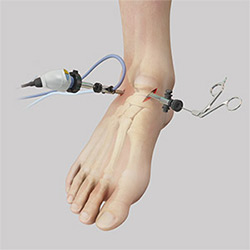
Knee arthroscopy is a common surgical procedure performed using an arthroscope, a viewing instrument, to diagnose or treat a knee problem. It is a relatively safe procedure and you will usually be discharged from the hospital on the same day of surgery.
What is the Anatomy of the Knee?
The knee joint is one of the most complex joints of the body. The lower end of the thighbone (femur) meets the upper end of the shinbone (tibia) at the knee joint. A small bone called the patella (kneecap) rests on a groove on the front of the femoral end. Another bone of the lower leg (fibula) forms a joint with the shinbone.
To allow smooth and painless motion of the knee joint, articular surfaces of these bones are covered with a shiny white slippery articular cartilage. Two C-shaped cartilaginous menisci are present in between the femoral end and the tibial end.
Menisci act as shock absorbers, providing cushion to the joints. They also play an important role in providing stability and load-bearing to the knee joint.
Bands of tissue, including the cruciate and collateral ligaments, keep the different bones of the knee joint together and provide stabilization to the joint. Surrounding muscles are connected to the knee bones by tendons. The bones work together with the muscles and tendons to provide mobility to the knee joint. The whole knee joint is covered by a ligamentous capsule, which further stabilizes the joint. This ligamentous capsule is also lined with a synovial membrane that secretes synovial fluid for lubrication.
What are the Indications for Knee Arthroscopy?
The knee joint is vulnerable to a variety of injuries. The most common knee problems where knee arthroscopy may be recommended for diagnosis and treatment are:
- Torn meniscus
- Torn or damaged cruciate ligament
- Torn pieces of articular cartilage
- Inflamed synovial tissue
- Misalignment of the patella
- Baker’s cyst: a fluid-filled cyst that develops at the back of the knee due to the accumulation of synovial fluid. It commonly occurs with knee conditions such as meniscal tear, knee arthritis, and rheumatoid arthritis.
- Certain fractures of the knee bones
What is the Procedure for Knee Arthroscopy?
Knee arthroscopy is performed under local, spinal or general anesthesia.
- Your surgeon makes two or three small incisions around the knee.
- Next, a sterile saline solution is injected into the knee to push apart the various internal structures, and provide a clear view and more room for your surgeon to work.
- An arthroscope, a narrow tube with a tiny video camera on the end, is inserted through one of the incisions to view the knee joint. The structures inside the knee are visible to your surgeon on a video monitor in the operating room.
- Your surgeon first examines the structures inside the knee joint to assess the cause of the problem.
- Once a diagnosis is made, surgical instruments such as scissors, motorized shavers, or lasers are inserted through another small incision, and the repair is performed based on the diagnosis.
The repair procedure may include any of the following:
- Removal or repair of a torn meniscus
- Reconstruction or repair of a torn cruciate ligament
- Removal of small torn pieces of articular cartilage
- Removal of loose fragments of bones
- Removal of inflamed synovial tissue
- Removal of Baker’s cyst
- Realignment of the patella
- Making small holes or microfractures near damaged cartilage to stimulate cartilage growth
After the repair, the knee joint is carefully examined for bleeding or any other damage. The saline is then drained from the knee joint. Finally, the incisions are closed with sutures or steri-strips, and the knee is covered with a sterile dressing.
What Does Postoperative Care for Knee Arthroscopy Involve?
You are most often discharged on the same day of your knee arthroscopy. Pain medicines are prescribed to manage pain. Crutches or a knee brace may be recommended for several weeks. A rehabilitation program may also be advised for a successful recovery. Therapeutic exercises aim to restore motion and strengthen the muscles of the leg and knee.
What Does Recovery after Knee Arthroscopy Involve?
Recovery after the surgery depends on the type of procedure performed. Recovery from simple procedures is often fast. Recovery from knee arthroscopy is much faster than that from an open knee surgery.
What are the Risks and Complications of Knee Arthroscopy?
Knee arthroscopy is a safe procedure; complications are very rare. Complications specific to knee arthroscopy include bleeding in the knee joint, infection, knee stiffness, blood clots or continuing knee problems.

Richard Judd Robins
MD, FAAOS, FAANA Dual Board Certified in Orthopaedic Surgery and Sports Medicine
Dr. Robins brings more than 26 years of experience in military service, orthopaedic surgery, sports medicine, clinical care, and academic leadership. Throughout his distinguished career, he has dedicated himself to caring for active-duty military personnel, athletes, and patients with complex orthopaedic injuries while advancing education, research, and mentorship in orthopaedic sports medicine.
Why Choose Dr. Richard Judd Robins for Knee Arthroscopy?
Choosing an experienced sports medicine surgeon is an important step toward achieving the best possible outcome from knee arthroscopy.
Dr. Robins offers:
- Dual board certification in Orthopaedic Surgery and Orthopaedic Sports Medicine
- Fellowship training in Orthopaedic Sports Medicine
- Extensive experience treating athletes, military personnel, and active adults
- Advanced expertise in minimally invasive arthroscopic knee procedures
- Comprehensive treatment for meniscus tears, cartilage injuries, ligament damage, and other knee conditions
- Personalized treatment plans tailored to your symptoms, lifestyle, and activity goals
- Comprehensive care from diagnosis through rehabilitation and recovery
Whether you are recovering from a sports injury or seeking relief from chronic knee pain, Dr. Robins is committed to helping you achieve lasting improvement and return to the activities you enjoy.
Knee Arthroscopy FAQs
What is knee arthroscopy?
Knee arthroscopy is a minimally invasive surgical procedure that uses a small camera and specialized instruments inserted through tiny incisions to diagnose and treat problems inside the knee joint.
What conditions can be treated with knee arthroscopy?
Knee arthroscopy can be used to treat meniscus tears, cartilage injuries, ACL injuries, inflamed synovial tissue, loose bone or cartilage fragments, Baker's cysts, and certain kneecap alignment problems.
Is knee arthroscopy an outpatient procedure?
Yes. Most knee arthroscopy procedures are performed on an outpatient basis, allowing patients to return home the same day as surgery.
How long does recovery take after knee arthroscopy?
Recovery depends on the specific procedure performed. Many patients return to normal daily activities within a few weeks, while more complex repairs may require a longer rehabilitation period.
Will I need physical therapy after knee arthroscopy?
Physical therapy is often an important part of recovery. Rehabilitation helps restore range of motion, improve strength, and support a safe return to sports and other activities.
Is knee arthroscopy safe?
Knee arthroscopy is considered a safe and commonly performed procedure. As with any surgery, there are potential risks, but complications such as infection, blood clots, or persistent knee problems are uncommon.
Schedule a Knee Arthroscopy Consultation in Salt Lake City, UT
If knee pain, swelling, instability, or limited mobility is preventing you from living an active life, expert care may help you find lasting relief. Dr. Richard Judd Robins provides advanced knee arthroscopy and comprehensive sports medicine care for patients throughout Salt Lake City, Park City, Farmington, South Jordan, and surrounding Utah communities.
Schedule your consultation today to learn more about your treatment options and discover whether knee arthroscopy can help relieve pain, restore knee function, and get you back to the sports, work, and activities you enjoy.