Advanced Ligament Preservation and Repair for Joint Stability and Lasting Recovery
Ligament injuries can cause pain, instability, weakness, and difficulty participating in sports, exercise, work, and daily activities. Whether caused by a sports injury, accident, or degenerative condition, damaged ligaments can compromise joint function and increase the risk of further injury if left untreated.
Dr. Richard Judd Robins, a dual board-certified orthopaedic surgeon with subspecialty certification in Orthopaedic Sports Medicine, specializes in advanced ligament preservation and repair procedures for patients throughout Salt Lake City, Park City, Farmington, South Jordan, and surrounding Utah communities. Utilizing modern surgical techniques and individualized rehabilitation programs, Dr. Robins helps patients restore joint stability, improve function, and safely return to active lifestyles.
- Salt Lake City
- Farmington
- Salt Lake City
- Book An Appointment
What is Ligament Preservation/Repair?
Ligament preservation/repair is a surgical procedure to correct and restore a torn or damaged ligament by replacing it with a graft or by removing the injured ends and suturing the remaining healthy ends of the ligament together. This procedure can be performed for ligaments of the shoulder, elbow, knee, and ankle.
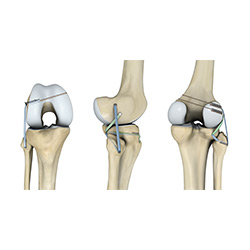
Ligaments and Ligament Injuries
Ligaments are bands of tough elastic tissues around your joints. They connect one bone to another. Ligaments provide support to your joints and regulate their movements. Ligaments are present in your knees, ankles, shoulders, elbows, and other joints.
The ligaments can be injured during contact sports such as football, soccer, and basketball. The other causes of ligament injuries include accidents and degenerative wear and tear.
Indications for Ligament Preservation/Repair
Your surgeon may recommend a ligament preservation/repair if you have:
- Ligament injury
- Advanced osteoarthritis that has not responded to non-surgical treatments
Procedure: Ligament Preservation/Repair
Ligament preservation/repair is usually performed under general anesthesia.
- An incision (cut) is made at the specific site.
- Your surgeon can either perform ligament preservation/repair through a single long cut called a traditional open surgery or through 2-4 tiny incisions using an arthroscope, called arthroscopic surgery.
The surgical repair of a torn/injured ligament can be accomplished through either of the methods below:
- Your orthopedic surgeon may reconstruct the torn ligament using a tissue graft taken from another part of your body or from a donor. Gradually, over a period of a few months, the graft heals. Or,
- Your orthopedic surgeon may remove the damaged part of the ligament and stitch the healthy ends together.
Upon completion, the incisions are closed and covered with a bandage.
Post-Operative Care for Ligament Preservation/Repair
You may be required to stay in the hospital for a day or two to monitor your recovery.
- You will be prescribed medications to prevent blood clots.
- Swelling and discomfort can be managed with pain relief medications.
- You will be referred to a physical therapist soon after your surgery to regain range of motion.
- You will be encouraged to move around to keep your joints active and facilitate a quicker recovery.
- You should follow your surgeon’s advice regarding activities post-surgery.
- You should visit your doctor for a follow-up examination after surgery to monitor your progress.
What are the Risks and Complications of Ligament Preservation/Repair?
Every surgical procedure carries some amount of risk. Similarly, ligament preservation/repair may also have certain risks and complications. These may include:
- Complications from anesthesia
- Bleeding
- Infection
- Nerve injury
- Deep vein thrombosis (blood clot)
What are the Benefits/Advantages of Ligament Preservation/Repair?
Ligament preservation/repair helps restore a torn or damaged ligament to a healthy state enhancing your quality of life. If you are an athlete, ligament preservation will help you return to your high-level sports after a period of rehabilitation.
Richard Judd Robins
MD, FAAOS, FAANA Dual Board Certified in Orthopaedic Surgery and Sports Medicine
Dr. Robins brings more than 26 years of experience in military service, orthopaedic surgery, sports medicine, clinical care, and academic leadership. Throughout his distinguished career, he has dedicated himself to caring for active-duty military personnel, athletes, and patients with complex orthopaedic injuries while advancing education, research, and mentorship in orthopaedic sports medicine.
Why Choose Dr. Robins for Ligament Preservation/Repair?
Successful ligament treatment requires a thorough understanding of joint biomechanics, sports medicine, and advanced surgical techniques. Dr. Robins provides comprehensive care designed to optimize healing and long-term outcomes.
Dr. Robins offers:
- Dual board certification in Orthopaedic Surgery and Orthopaedic Sports Medicine
- Fellowship training in Orthopaedic Sports Medicine
- Extensive experience treating ligament injuries in athletes and active individuals
- Expertise in both arthroscopic and open ligament repair techniques
- Personalized treatment plans tailored to each patient's goals and activity level
- Comprehensive evaluation and diagnosis of complex joint injuries
- Advanced rehabilitation strategies to support recovery
- Commitment to helping patients regain stability, strength, and confidence
Whether you have suffered a knee, shoulder, ankle, or elbow ligament injury, Dr. Robins is dedicated to providing expert care from diagnosis through recovery.
Ligament Preservation/Repair FAQs
What is ligament preservation and repair?
Ligament preservation and repair refers to surgical procedures designed to restore damaged ligaments by repairing existing tissue or reconstructing the ligament using a graft. The goal is to restore joint stability and function while preserving as much healthy tissue as possible.
Which joints can benefit from ligament repair?
Ligament preservation and repair procedures may be performed on the knee, shoulder, ankle, elbow, and other joints affected by ligament injuries.
When is ligament repair recommended?
Surgery may be recommended when a ligament tear causes significant instability, pain, loss of function, or when non-surgical treatments such as physical therapy, bracing, and medications fail to provide adequate improvement.
Is ligament repair performed arthroscopically?
Many ligament preservation and repair procedures can be performed arthroscopically using small incisions and specialized instruments. However, some injuries may require an open surgical approach depending on the severity and location of the damage.
How long does recovery take after ligament repair?
Recovery varies depending on the ligament involved and the type of repair performed. Most patients participate in physical therapy and rehabilitation for several months to restore strength, stability, and mobility.
Will I be able to return to sports after ligament repair?
Many patients successfully return to sports and physical activities following ligament repair. Return-to-play timelines depend on the specific injury, healing progress, and successful completion of rehabilitation.
What happens if a torn ligament is left untreated?
Untreated ligament injuries can lead to chronic joint instability, recurring injuries, cartilage damage, reduced function, and an increased risk of developing arthritis over time.
Schedule a Ligament Preservation/Repair Consultation in Salt Lake City, UT
If you are experiencing joint instability, pain, or limitations due to a ligament injury, expert treatment can help you regain confidence and return to the activities you enjoy. Dr. Richard Judd Robins provides advanced ligament preservation and repair procedures for patients throughout Salt Lake City, Park City, Farmington, South Jordan, and surrounding Utah communities.
Schedule your consultation today to learn more about your treatment options. Take the first step toward restoring joint stability, improving mobility, and achieving a successful recovery with specialized orthopaedic care from Dr. Robins.