Advanced Minimally Invasive Arthroscopic Surgery for Joint Pain and Sports Injuries
Joint pain, stiffness, instability, and sports-related injuries can significantly impact your ability to stay active and enjoy everyday life. When conservative treatments such as medication, physical therapy, and activity modification fail to provide lasting relief, arthroscopic surgery may offer a minimally invasive solution to diagnose and treat a wide range of orthopaedic conditions.
Dr. Richard Judd Robins, a dual board-certified orthopaedic surgeon with subspecialty certification in Orthopaedic Sports Medicine, specializes in advanced arthroscopic surgery for patients throughout Salt Lake City, Park City, Farmington, South Jordan, and surrounding Utah communities. Using state-of-the-art arthroscopic techniques, Dr. Robins treats injuries affecting the knee, shoulder, hip, and other joints while helping patients recover faster and return to active lifestyles.
- Salt Lake City
- Farmington
- Salt Lake City
- Book An Appointment
What is Arthroscopic Surgery?
Arthroscopic surgery, also known as arthroscopy, is a surgical procedure to visualize, diagnose, and treat problems inside a joint using a specialized instrument known as an arthroscope.
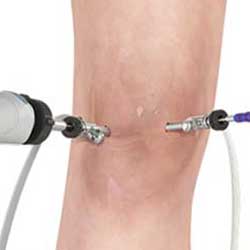
An arthroscope is a flexible fiberoptic tube that contains a small lens or camera and a lighting system to magnify and illuminate structures inside a joint. The camera attached to the arthroscope shows an image of the joint on a television screen allowing the surgeon to examine the affected joint or areas such as cartilage, ligaments, and tendons, and perform the repair.
Different Types of Arthroscopic Surgery
Arthroscopic surgery can be performed on any joint. Shoulder and knee arthroscopy are the most common arthroscopic procedures conducted for repairing meniscus and cartilage problems and fixing rotator cuff tears respectively. Some of the common types of arthroscopic surgery include:
- Shoulder arthroscopy
- Knee arthroscopy
- Ankle arthroscopy
- Hip arthroscopy
- Wrist arthroscopy
- Elbow arthroscopy
Indications for Arthroscopic Surgery
In general, arthroscopic surgery is conducted to diagnose and treat a variety of conditions. Arthroscopic surgery is commonly indicated for:
- Articular cartilage defects and injuries
- Joint debridement and washout for osteoarthritis
- Removal of loose bodies
- Synovectomy
- Meniscal tears
- Anterior cruciate ligament (ACL) tears
- Posterior cruciate ligament (PCL) tears
- Arthroscopic-assisted fixation of tibial plateau fractures
- Evaluation of joints prior to joint replacement
Preparation for Arthroscopic Surgery
Arthroscopic surgery preparation depends on the joint being examined or repaired by your surgeon. However, in general, you are required to:
- Avoid taking certain medications or supplements that may increase the risk of bleeding
- Inform your doctor if you are allergic to any medications or anesthesia
- Avoid consuming liquids or solid foods 6 to 8 hours before surgery
- Wear comfortable clothing to get on and off easily
- Bring assistive devices, such as a walker, cane, or crutches
- Arrange for a ride as you will not be able to drive back yourself
Arthroscopic Surgery Procedure
The surgery is performed under general or local anesthesia. After adequately sterilizing the surgical area, your surgeon makes a few small keyhole incisions through which the arthroscope and tiny specialized instruments are inserted. The joints are irrigated with water to clear debris and aid in visibility. The camera attached to the tip of the arthroscope allows the doctor to view the structures inside the joint through a television screen, and the damaged structures are repaired. The instruments and arthroscope are then withdrawn, and the surgical incisions are closed with sterile dressings or sutures.
Postoperative Care of Arthroscopic Surgery
Before being discharged, your doctor or nurse will give you appropriate postop instructions, such as:
- How to care your incisions and dressing
- Exercises you should do
- What activities you must avoid
- Use of assistive devices like a sling, splint, or crutches
- Use of pain medications
- Rehabilitation program for a quicker recovery
- Follow-up visit to remove dressings or sutures and monitor your overall progress
Risks and Complications of Arthroscopic Surgery
The risks and complications of an arthroscopic procedure are minimal and occur in less than one percent of all arthroscopic surgeries. Some of the possible risks and complications of arthroscopic surgery include:
- Infection
- Swelling or bleeding
- Blood clots
- Damage to nerves or blood vessels
- Instrument breakage
- Anesthetic problems
Benefits of Arthroscopic Surgery Over Traditional Open Surgery
Some of the benefits of arthroscopic surgery over traditional open surgery include:
- Can usually be carried out as an outpatient procedure
- Swelling is substantially reduced due to minimal incisions
- Pain is substantially reduced due to minimal manipulation of healthy tissue
- Risk of infection is less due to the minimally invasive approach
- Risk of complications associated with blood loss is notably minimal
- Shorter hospital stay and much lesser recovery time
- Very minimal incisional scarring
- Reduced surgical risk as arthroscopic surgery is a minimally invasive procedure
- Usually more successful than open joint procedures
- Both diagnosis and surgery can be carried out in one approach
- Use of tiny instruments in arthroscopy aids in minimal damage to surrounding tissues compared to large-sized surgical devices
Why Choose Dr. Robins for Arthroscopic Surgery?
Choosing an experienced sports medicine surgeon is an important step toward achieving the best possible outcome from arthroscopic surgery.
Dr. Robins offers:
- Dual board certification in Orthopaedic Surgery and Orthopaedic Sports Medicine
- Fellowship training in Orthopaedic Sports Medicine
- Extensive experience treating athletes and active individuals
- Advanced expertise in minimally invasive arthroscopic procedures
- Comprehensive diagnosis and treatment of joint injuries and disorders
- Personalized treatment plans tailored to your goals and lifestyle
- Emphasis on preserving joint function and mobility
- Dedicated support throughout recovery and rehabilitation
Whether you are dealing with a sports injury, cartilage damage, ligament tear, or chronic joint pain, Dr. Robins is committed to helping you achieve long-term relief and improved function.
Arthroscopic Surgery FAQs
What is arthroscopic surgery?
Arthroscopic surgery is a minimally invasive procedure that allows a surgeon to view, diagnose, and treat joint conditions using a small camera called an arthroscope and specialized surgical instruments inserted through tiny incisions.
What conditions can be treated with arthroscopy?
Arthroscopy is commonly used to treat meniscus tears, ACL injuries, cartilage damage, rotator cuff tears, labral tears, loose bodies within a joint, synovitis, and various sports-related injuries.
Which joints can be treated arthroscopically?
Arthroscopic surgery can be performed on several joints, including the knee, shoulder, hip, ankle, elbow, and wrist. The specific procedure depends on your diagnosis and symptoms.
Is arthroscopic surgery minimally invasive?
Yes. Arthroscopy requires only small incisions, resulting in less tissue disruption, reduced pain, smaller scars, and often a faster recovery compared to traditional open surgery.
How long is recovery after arthroscopic surgery?
Recovery varies depending on the joint being treated and the complexity of the procedure. Some patients return to normal activities within a few weeks, while more extensive repairs may require several months of rehabilitation.
Will I need physical therapy after arthroscopy?
In most cases, physical therapy is an important part of recovery. Rehabilitation helps restore joint mobility, strength, stability, and overall function.
Is arthroscopic surgery performed as an outpatient procedure?
Many arthroscopic procedures are performed on an outpatient basis, allowing patients to return home the same day following surgery.
Schedule an Arthroscopic Surgery Consultation in Salt Lake City, UT
If joint pain, sports injuries, cartilage damage, or ligament tears are limiting your ability to work, exercise, or enjoy daily activities, expert care is available. Dr. Richard Judd Robins provides advanced arthroscopic surgery for patients throughout Salt Lake City, Park City, Farmington, South Jordan, and nearby Utah communities.
Schedule your consultation today to learn more about your treatment options. Take the first step toward pain relief, improved joint function, and a safe return to the activities you enjoy with expert arthroscopic care from Dr. Robins.