
What is Hip Labral Reconstruction?
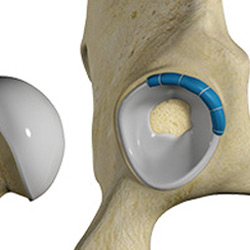
Hip labral reconstruction is a surgery that involves the use of a graft to replace the damaged portion of a hip labrum. The hip labrum is a ring of fibrous cartilaginous tissue that surrounds the socket of the hip joint. Injuries to the hip labrum are usually seen in athletes involved in high-impact sports such as ice hockey, soccer, and football. They can also occur due to traumatic injury or degenerative conditions.
What are the Indications for Hip Labral Reconstruction?
Hip labral reconstruction is usually indicated if there is severe labral damage and traditional debridement and hip labral repair may not be sufficient to restore normal hip function. This surgery will also be recommended if you have persistent pain in the hip and a restricted range of motion even after labral tear repair.
What is the Procedure for Hip Labral Reconstruction?
The procedure of hip labral reconstruction involves the following:
- The surgery is performed under general or spinal anesthesia.
- This surgery may be performed as a minimally invasive hip arthroscopic surgery where an arthroscope (a thin flexible tube) with a camera at one end is inserted through a small incision into the hip joint to view the joint surface.
- Your surgeon will pump a sterile solution into the hip joint which helps to remove the damaged tissue and debris.
- A graft (soft tissue) will be taken from the donor site (iliotibial band or hamstring tendon) and used to partially or completely replace the damaged labrum using sutures.
- The reconstructed graft will be inspected to ensure a continuous seal of the femoral head.
- The overlying soft tissues are reapproximated, the incision is closed with sutures, and a bandage is placed over it.
What Does Postoperative Care for Hip Labral Reconstruction Involve?
Recovery after a hip labral reconstruction may vary based on the severity of the injury. Your doctor will recommend physical therapy to restore mobility and strength of the joints and muscles. You can expect to walk without assistance in about 2-3 weeks after arthroscopic hip labral reconstruction.
What are the Risks and Complications of Hip Labral Reconstruction?
Some of the possible risks and complications of hip labral reconstruction includes:
- Bleeding
- Nerve damage
- Pain
- Infection
- Joint stiffness